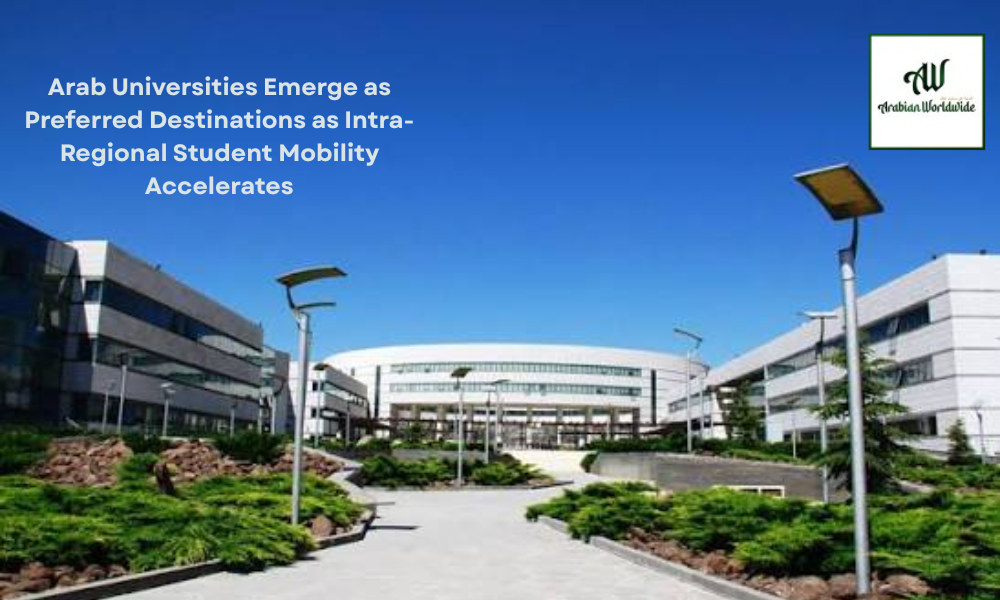
The Arab Universities flow of international students across the Arab world is gaining momentum, signalling a significant shift in regional higher education. While Western Europe and North America continue to attract nearly half of the world’s 7.3 million internationally mobile students, new findings from the UNESCO Higher Education Global Trends Report 2026 reveal that an increasing number of students are choosing universities within the Arab region itself.
Arab Universities Regional Mobility Reshapes Higher Education
According to the report, intra-regional student mobility has become a defining trend across several Arab nations. Jordan records the highest share, with 82% of its international students arriving from neighbouring Arab countries. Bahrain follows at 76%, while Oman, Qatar, and Saudi Arabia report figures of 67%, 65%, and 57% respectively. Countries such as Algeria and Mauritania also receive the majority of their international students from within the region.
This growing preference reflects a broader transformation in the region’s higher education landscape, driven by stronger academic ties, geographic proximity, and shared cultural and linguistic connections.
Egypt Strengthens Its Position as a Regional Education Hub
Among the standout examples highlighted by UNESCO is Egypt’s ‘Study in Egypt’ initiative, which has been recognised as an emerging model for South-South educational mobility. The Arab Universities programme has attracted students from across the Arab world and Africa through expanded scholarship opportunities, simplified visa procedures, and a wider range of English-language academic programmes.
As a result, students from countries including Sudan, Libya, Palestine, and Yemen are increasingly selecting Egyptian universities over traditional study destinations in Europe and North America. Beyond economic contributions, this movement is fostering stronger regional collaboration, cultural exchange, and long-term professional networks.
Recognition Policies Remain a Challenge
Despite encouraging growth, UNESCO notes that policy frameworks have not kept pace with student mobility. Although many countries worldwide have adopted strategies to encourage international education, the Arab region continues to lag in implementing recognition agreements that simplify the acceptance of academic qualifications across borders.
The Arab States Convention on the Recognition of Qualifications, adopted in 2022, aims to establish transparent and fair recognition of degrees throughout the region. However, by March 2026, only five countries had ratified the convention, including Egypt and Lebanon, limiting its broader impact.
Priorities for the Future
The report recommends accelerating ratification of the convention, expanding scholarships and regional recruitment initiatives, and improving higher education data collection. UNESCO also notes that only about half of Arab countries currently report inbound student mobility data to its statistical institute, making long-term planning more difficult.
As regional Arab Universities continue to attract students from neighbouring countries, the report suggests that intra-Arab academic mobility is becoming more than an educational trend—it is emerging as a catalyst for stronger regional integration, collaboration, and shared development.
Also Read :- Arab League Rejects Calls to End UNRWA, Reaffirms Agency’s Legal Mandate