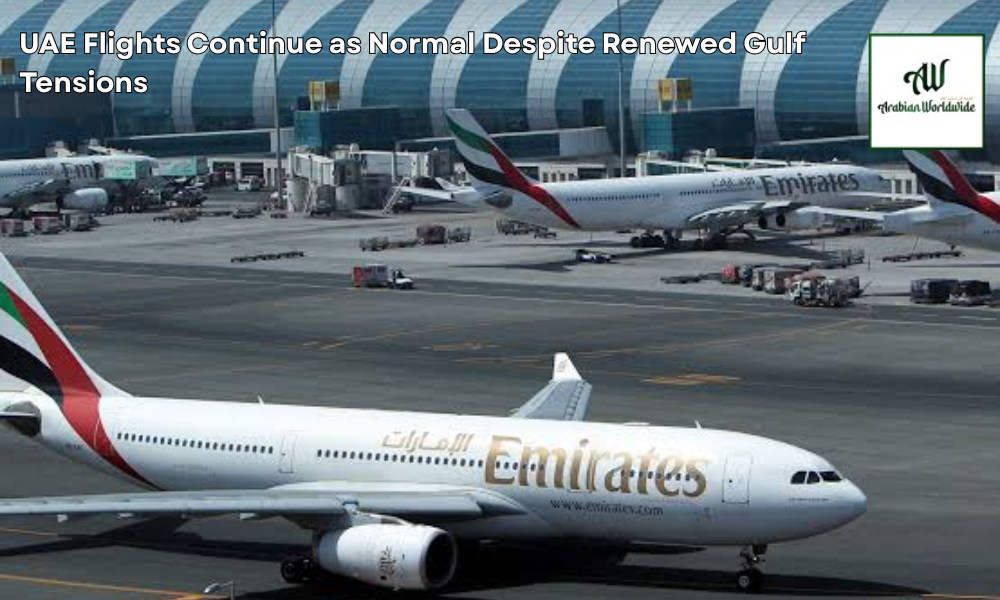
Major airlines in the UAE Flights, including Emirates and Etihad Airways, are continuing to operate largely as scheduled despite renewed geopolitical tensions in the Middle East following the end of the interim peace agreement between the United States and Iran.
While the latest escalation has raised concerns over regional air travel, the UAE’s aviation sector has so far remained resilient, with carriers adapting their operations by rerouting flights rather than suspending services altogether.
Airlines Prioritise Rerouting Over Cancellations
Unlike the severe disruption witnessed earlier in the year, when the conflict significantly affected aviation across the Gulf, most UAE Flights, airlines are maintaining their schedules with limited operational changes.
Emirates has continued operating the majority of its global network by avoiding conflict zones where necessary. The airline has temporarily suspended flights to Iran, while certain routes over Iraq remain restricted. Emirates said it is closely monitoring developments and will continue to prioritise passenger safety while adjusting flight paths as required.
Etihad Airways has adopted a similar strategy. The Abu Dhabi-based carrier continues to operate most of its services, with flights to Iran suspended and some Iraqi routes affected by regional instability. The airline is also pressing ahead with its expansion plans and is reportedly close to securing an order for 10 additional Boeing 787 Dreamliners to strengthen its growing international network.
flydubai Faces Greater Operational Challenges
Among UAE Flights carriers, flydubai has experienced comparatively higher levels of disruption due to its extensive regional network.
The low-cost airline serves a large number of destinations across the Middle East, many of which have been directly impacted by airspace restrictions and security concerns. As a result, flydubai has cancelled multiple flights to Iran, Iraq and several other destinations across the Gulf.
Recovery Continues Despite Regional Uncertainty
Despite the latest geopolitical developments, the region’s aviation industry has shown strong signs of recovery in recent months. Emirates has restored most of its international network and expanded services to several destinations, while Etihad recently announced additional flights to numerous global markets.
The sector also received a significant boost with Riyadh Air launching its inaugural operations in June, signalling continued confidence in the region’s long-term aviation growth.
Governments Update Travel Advice
Several governments have updated their travel advisories in response to the evolving security situation.
The UK’s Foreign, Commonwealth & Development Office has not reintroduced its previous warning against non-essential travel to the UAE. However, it has advised travellers to remain vigilant, follow local updates and be prepared for possible transport disruptions.
Ireland’s Department of Foreign Affairs has taken a more cautious approach, advising against all travel to Iran, Iraq, Israel and Lebanon, while recommending that citizens avoid non-essential travel to the UAE Flights , Qatar, Bahrain, Kuwait, Saudi Arabia and Jordan. The department warned that the regional security environment remains volatile and that airspace closures or flight disruptions could occur with little notice.
Also Read :- Airlines Gradually Restore Middle East Flights, Though Disruptions Persist