Bahrain is pursuing digital transformation under its national artificial intelligence (AI) policy and Economic Vision 2030, aiming to build an economy where AI has practical applications across public and private sectors. Education and workforce development are central to preparing workers for an AI-driven economy.
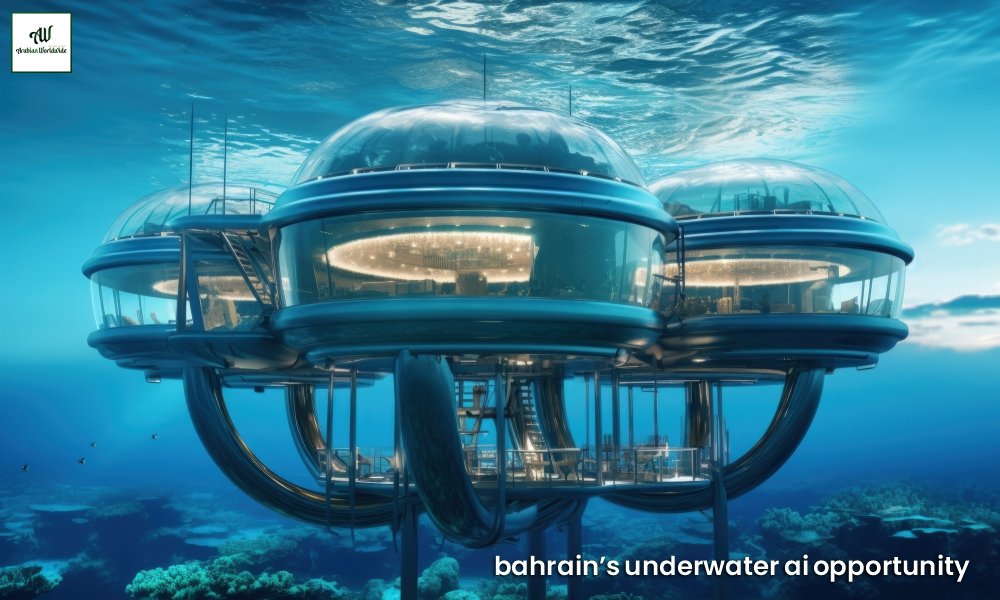
Yet Bahrain’s AI strategy could extend beyond workforce readiness. Its geography presents an opportunity to explore a less conventional form of AI infrastructure: underwater data centers (UDCs).
Turning Water Into Infrastructure
Bahrain has about 300 square miles of land but roughly 2,800 square miles of territorial waters. Its shallow surrounding waters create conditions for subsea computing experiments.
UDCs can use surrounding seawater for cooling, potentially reducing energy consumption compared with conventional facilities. China’s subsea projects have reported energy savings exceeding 20 percent.
However, underwater facilities bring deployment, maintenance, and marine-ecosystem challenges. Bahrain also faces a significant hurdle: its surrounding waters are warm. Higher temperatures can reduce cooling efficiency and increase reliance on technologies such as liquid cooling.
A Small Pilot Could Test the Model
Renewable energy could help address some constraints. Offshore solar or wind installations could supply power directly to a subsea facility, reducing pressure on Bahrain’s electricity grid. China has also incorporated renewable power into underwater data-center initiatives.
Construction costs also remain substantial. Global data-center costs are projected to reach about $11.3 million per megawatt in 2026. Applying that benchmark, a five-megawatt Bahrain pilot could cost roughly $56.5 million. Such a facility would be better positioned as a research and demonstration project than as a large commercial operation.
Bahrain Building a Strategic Technology Asset
Bahrain could reduce risks by partnering with international technology companies and sovereign investors. Microsoft’s Project Natick demonstrated potential reliability and energy-efficiency benefits of subsea data centers, providing relevant research experience.
A pilot could let Bahrain test underwater computing in warmer waters while studying hybrid cooling, renewable integration, marine impacts, and resilience. Beyond supporting its AI ambitions, the project could give Bahrain a platform for climate-resilient digital infrastructure research and demonstrate how limited land resources can be complemented by innovative use of surrounding waters.
Also Read :-Dubai Airport Plans Underground Fuel Storage to Strengthen Strike Resilience