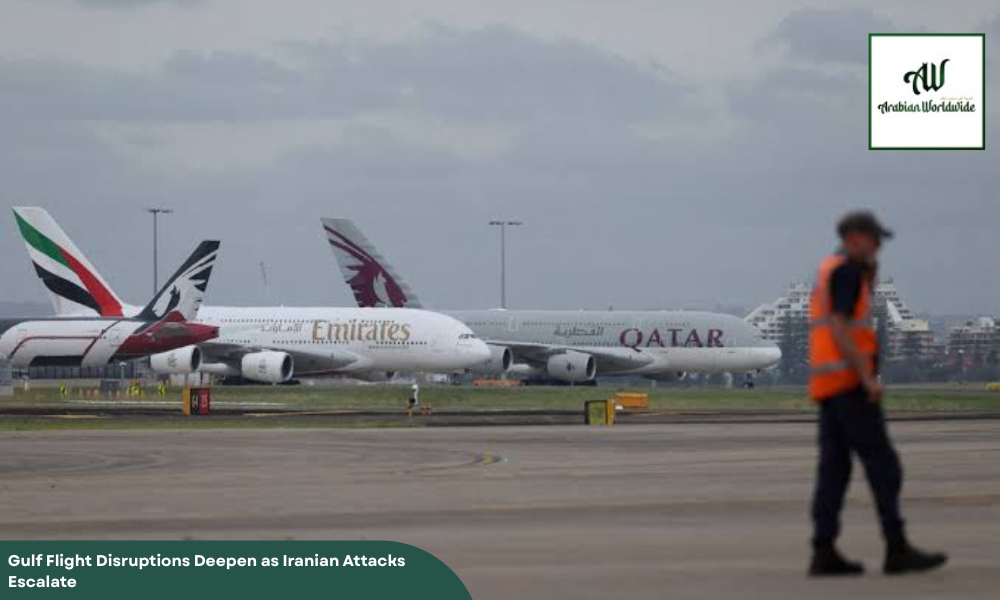
Gulf Flight disruption across the Middle East has intensified following renewed hostilities between the US and Iran, with Kuwait becoming the latest Gulf nation to respond to Iranian missile and drone attacks.
On Thursday morning, Kuwait’s armed forces said its air-defence systems were responding to what they described as “heinous Iranian aggression”, after several drones and missiles were launched towards its territory. Authorities reassured residents that explosions heard across the country were largely the result of air-defence interceptions.
The latest escalation follows a series of attacks across the region. Jordan reported multiple drone and missile incursions earlier in the week, most of which were intercepted, while Bahrain also said it had neutralised several Iranian drones. The UAE confirmed the interception of an Iranian drone over its territorial waters on Monday.
Airports Face Continuing Disruption
The Gulf Flight escalating conflict is having a direct impact on regional aviation. US embassies across the Middle East have issued security alerts warning citizens of potential airspace closures, flight cancellations and further travel disruption.
Several major airports, including Dubai International, Abu Dhabi’s Zayed International, Kuwait International and Bahrain International, have reported delays affecting arrivals and departures. Airlines including Emirates, Etihad, Gulf Flight Air, Air Arabia and Kuwait Airways are among those experiencing operational disruptions.
Despite the heightened tensions, airspace across Jordan, Bahrain, Kuwait and the UAE remains open and operational. However, passengers travelling in the region are being advised to monitor airline notifications closely, as schedules may change at short notice.
Rising Tensions, Rising Oil Prices
The renewed violence follows a US campaign aimed at increasing economic and military pressure on Iran. Washington said its latest strikes targeted approximately 100 sites, including IRGC air-defence systems, radar and communications facilities, as well as mine-laying equipment. Iranian authorities reported 18 deaths and more than 100 injuries from the attacks.
The escalation has also unsettled global energy markets, with oil prices rising as markets opened, reflecting renewed concerns over regional supply routes and the Strait of Hormuz.
Also Read :- U.S. Crude Oil Inventories Decline by 1.7 Million Barrels as Refinery Activity Strengthens
Diplomatic Stalemate Continues
Now entering its sixth month, the conflict remains locked in a diplomatic stalemate. Washington continues to push for tougher sanctions and economic measures against Tehran, while Iran has warned of retaliation against countries supporting US pressure.
With several Gulf states already affected by missile and drone attacks, airlines and travellers across the region remain on heightened alert as uncertainty over the security of regional airspace persists.
Also Read :- Etihad Expands North American Network With Eight Routes and Nearly 1 Million Seats in 2026