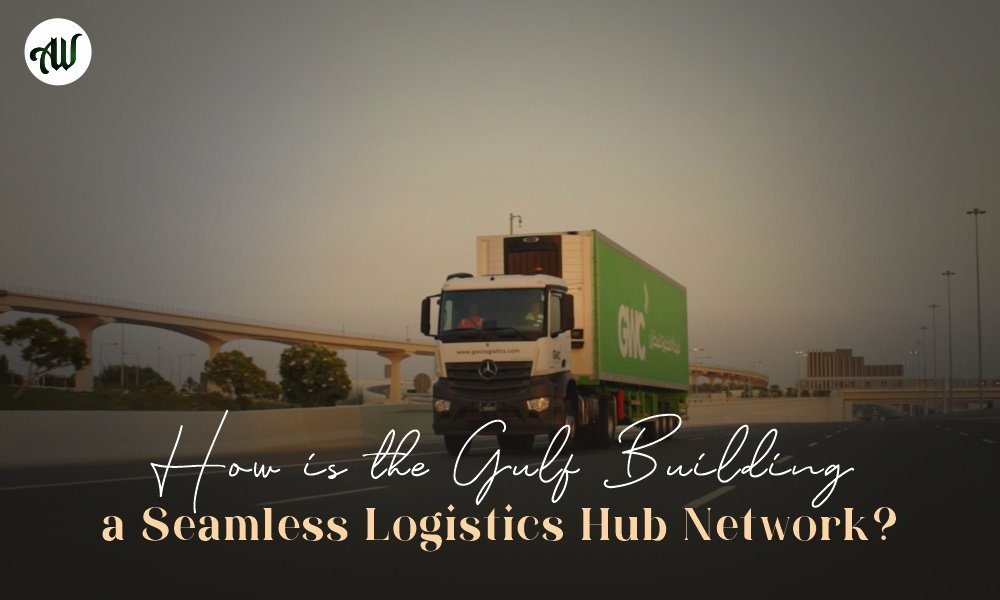
The Gulf region is redefining the future of global trade. Positioned between Asia, Africa, and Europe, it has long been a strategic crossroads. Today, that geographical advantage is being transformed into economic power as Gulf nations work to build an interconnected logistics hub network, one that links ports, airports, and free zones into a single, efficient ecosystem.
This transformation is not only changing how goods move across borders but also how regional economies compete on a global scale.
The Vision: From Transit Zone to Global Connector
For decades, Gulf economies have relied on oil exports as their primary source of income. However, under ambitious national visions such as Saudi Vision 2030 and the UAE Centennial 2071, diversification has become a regional priority. Developing a unified logistics hub network is central to this vision.
The idea is simple but powerful: by connecting infrastructure, streamlining regulations, and digitizing trade systems, the Gulf can become the world’s fastest, most efficient corridor for goods movement.
Saudi Arabia, for example, aims to position itself as a global logistics gateway through massive investments in ports like King Abdullah Port and the Jeddah Islamic Port, as well as by linking land, sea, and air routes under the Saudi Global Supply Chain Resilience Initiative. Similarly, the UAE continues to expand its world-class logistics infrastructure through Jebel Ali Port, Khalifa Port, and its integrated airfreight systems in Dubai and Abu Dhabi.
Digital Transformation: The Power Behind Connectivity
No modern freight hub can thrive without digital integration. The Gulf is rapidly adopting advanced technologies such as artificial intelligence, blockchain, and IoT to create real-time transparency and efficiency across the supply chain.
Smart customs systems in the UAE and Saudi Arabia allow traders to process shipments in minutes rather than days, while AI-driven predictive analytics help businesses optimize routes and reduce costs.
These innovations make logistics not just faster but smarter an essential advantage for attracting global manufacturers, e-commerce giants, and investors.
Infrastructure Integration: Ports, Roads, and Railways
The physical backbone of the Gulf’s logistics transformation lies in its expanding infrastructure. Mega-projects such as Saudi Arabia’s Landbridge Railway and the GCC Railway Network are designed to link the entire region, connecting the Arabian Gulf to the Red Sea and beyond.
Once complete, these corridors will reduce transit times dramatically, allowing freight to move seamlessly from port to port without dependency on maritime bottlenecks.
By combining such connectivity with multimodal transport systems linking ports, airports, and logistics parks, the Gulf is setting new global standards in trade efficiency. Each country’s individual investments are increasingly viewed as parts of a collective regional network rather than isolated national projects.
Policy Alignment and Trade Facilitation
While infrastructure is the foundation, policy is the glue that holds a logistics network together. Harmonizing customs procedures, tariffs, and documentation standards across GCC nations will be key to creating a unified market.
Progress is already visible. Initiatives such as the GCC Common Customs Law and digital trade platforms like Fasah in Saudi Arabia demonstrate the region’s commitment to smoother cross-border trade.
Encouraging private sector participation, public-private partnerships, and investor-friendly free zones will further enhance the appeal of the Gulf as a unified logistics hub destination.
Sustainability and Green Logistics
The future of logistics is not just about speed it’s about sustainability. Gulf countries are actively integrating renewable energy into their logistics frameworks to align with global environmental standards.
Solar-powered warehouses, electric vehicle fleets, and smart energy grids are becoming part of logistics infrastructure. For instance, Saudi Arabia’s NEOM and the UAE’s Masdar are pioneering models of how sustainable urban design can incorporate efficient logistics networks.
As environmental, social, and governance (ESG) factors grow in importance, green logistics solutions will become a competitive advantage for the region’s logistics industry.
The Role of Human Capital and Innovation
While infrastructure and policy shape the landscape, human talent drives innovation. The Gulf’s education and training programs are being realigned to produce specialists in supply chain management, digital logistics, and transport engineering.
By nurturing a skilled workforce, regional economies can ensure that the logistics hub of tomorrow is managed by experts who understand both local markets and international trade dynamics.
Partnerships with global universities, vocational programs, and AI-driven logistics academies will ensure continuous knowledge transfer.
Conclusion
The Gulf’s journey to becoming a seamless logistics network is not a distant dream; it’s already in motion. With multi-billion-dollar infrastructure projects, digital transformation, and regulatory modernization, the region is well on its way to redefining the global supply chain landscape.
For Saudi Arabia and its neighbors, building a connected logistics hub network represents far more than economic diversification; it is a declaration of intent: to lead global commerce with innovation, sustainability, and vision.
In 2026 and beyond, the Gulf will not just be a stop on the map; it will be the center of movement for the world.