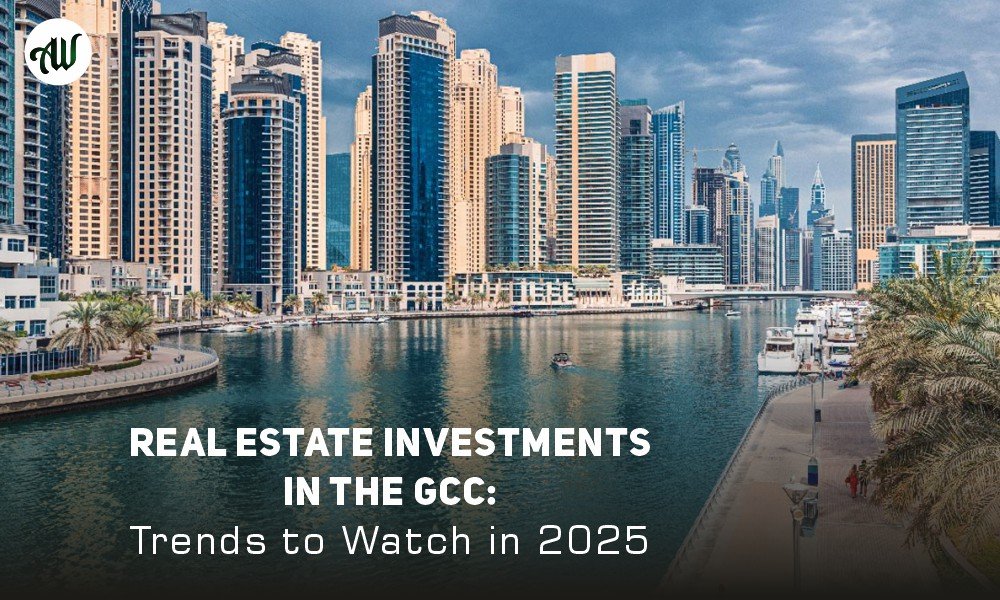
The Gulf Cooperation Council (GCC) has seen a surge in the real estate market. It has depicted exceptional growth, strength, and resilience since the first half of 2025. It records a robust growth fuelled by seamless sales activity with soaring investor demand. In Q1 of 2025, it reached $78.2 billion, recording an effortless 20% annual increase in transaction activity. While Saudi Arabia and Dubai continue to lead in transaction volume and value, every country is shaped by its own economic strategies, regulatory shifts, and investment priorities.
Real Estate Investments in the GCC: Trends to Watch in 2025
Real estate has long been a cornerstone of economic activity in the GCC, drawing both regional and global interest. As the region continues its journey of diversification, real estate investments are emerging as a key driver of sustainable growth, urban transformation, and international competitiveness. Entering 2025, the sector is evolving beyond property transactions into shaping modern cities, enhancing quality of life, and building resilient economies.
Driven by National Visions
The trajectory of real estate investments in the GCC is closely tied to national strategies such as Saudi Arabia’s Vision 2030, the UAE’s Tourism Strategy 2031, and Qatar’s plans for diversification. These frameworks position real estate as a vital enabler of tourism, commerce, and community development.
Ambitious projects like Saudi Arabia’s NEOM, Dubai’s futuristic smart city initiatives, and Oman’s waterfront redevelopments reflect how real estate investments are aligned with government-backed visions. For investors, such initiatives offer long-term security and attractive returns.
Sustainability in Focus
Sustainability is no longer a trend; it is becoming a standard. Developers across the GCC are increasingly adopting eco-friendly building practices, integrating renewable energy, and designing green spaces. These sustainable practices enhance livability while meeting the expectations of environmentally conscious investors and residents.
For the region, sustainable real estate investments mean healthier communities, stronger resilience against climate challenges, and alignment with global environmental goals.
Mixed-Use Communities on the Rise
Another defining trend in 2025 is the surge in mixed-use developments that combine residential, commercial, and leisure elements. These lifestyle-focused projects cater to growing demand for convenience, connectivity, and modern urban living.
From Dubai’s integrated hubs to Riyadh’s cultural districts, mixed-use communities are creating vibrant ecosystems. For investors, these projects promise steady demand and attractive rental yields, particularly from younger demographics seeking dynamic neighborhoods.
Technology and Smart Cities
Digital transformation is reshaping real estate investments in the GCC. Technologies such as AI, IoT, and blockchain are enhancing transparency, efficiency, and trust in property transactions.
Smart city initiatives, including Saudi Arabia’s NEOM and Dubai’s innovation-led projects, are introducing digitally connected infrastructures, automated systems, and data-driven services. These advancements open new opportunities in proptech and sustainable urban solutions.
Tourism-Led Developments
Tourism and real estate are increasingly intertwined. With Saudi Arabia opening to global visitors and the UAE maintaining its strong tourism hub status, tourism-driven real estate is flourishing. Luxury resorts, branded residences, and vacation homes are in high demand as the region strengthens its appeal to international travelers.
This growth ensures that real estate investments tied to hospitality and tourism remain highly lucrative in 2025 and beyond.
Regulatory Reforms and Foreign Investment
Several GCC countries are liberalizing property ownership laws to attract global investors. The UAE, Saudi Arabia, and Oman are offering long-term visas, expanding freehold ownership zones, and introducing investor-friendly reforms.
For Arab investors, this shift also unlocks regional cross-border opportunities, making real estate investments a more versatile and competitive asset class within the GCC.
Conclusion
Looking ahead, real estate investments in the GCC will continue to be shaped by sustainability, technology, and lifestyle-centric developments. Supported by ambitious government visions and strong investor confidence, the sector is set to play a central role in diversifying economies and reshaping urban experiences.
In 2025 and beyond, the GCC’s real estate sector is not just about buildings; it is about creating environments that foster growth, innovation, and inclusivity. For investors, this evolving landscape offers not only financial rewards but also a chance to contribute to the region’s future.