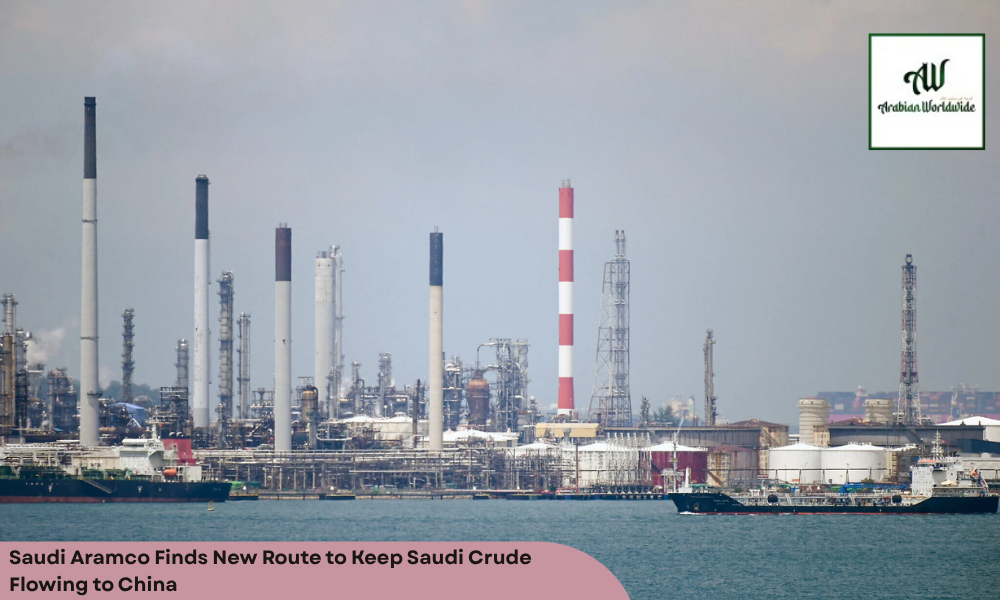
Saudi Arabia is finding ways to keep its crude exports moving to Asia despite disruptions around the Strait of Hormuz, using ship-to-ship transfers to bypass the most dangerous part of the route.
Ship-to-Ship Transfers Offer a Workaround
Saudi Aramco is offering Asian buyers additional September crude through ship-to-ship transfers outside the Strait of Hormuz, according to Reuters. The move comes after shipping data showed Saudi tankers carrying crude through the strait with their tracking systems switched off, highlighting the risks facing Gulf oil shipments.
Under the arrangement, Saudi Aramco crude is transported through the high-risk section of the journey before being transferred to another tanker near Fujairah in the UAE or Sohar in Oman. The second vessel then continues the voyage to the buyer, allowing it to avoid sending its own tanker through Hormuz.
Aramco has offered Arab Medium and Arab Heavy crude under this arrangement for a second consecutive week.
China Emerges as a Key Buyer
China is already taking advantage of the alternative shipping model. Two very large crude carriers (VLCCs), carrying a combined 4 million barrels of Saudi crude, were headed for China after receiving their cargoes through ship-to-ship transfers off Sohar, according to data from Vortexa and Kpler cited by Reuters.
One tanker is expected to arrive in Ningbo on September 15, while the other is scheduled to reach Zhanjiang on September 12. Both shipments are destined for Sinopec.
Saudi Arabia Adjusts Its Export Strategy
The latest move is part of a broader effort by Saudi Arabia to maintain oil exports while two key routes face disruptions.
Aramco resumed tanker loading at Ras Tanura and Juaymah earlier this month following a three-week pause. At the same time, the company has been sending more crude westward through the East-West pipeline and Egypt’s Sidi Kerir terminal, allowing it to supply European customers without using the Strait of Hormuz.
For Asian buyers, however, geography presents a bigger challenge. China lies beyond Hormuz, making alternative routes more difficult.
The ship-to-ship strategy effectively divides the journey into two stages. Aramco handles the riskiest section before transferring the crude outside the strait. While the arrangement is far from a return to normal Gulf oil trade, it is allowing Saudi barrels to reach China again—with the most dangerous leg increasingly becoming Aramco’s responsibility.
Also Read :- Air Arabia to Launch Sharjah–Gdansk Flights in December 2026