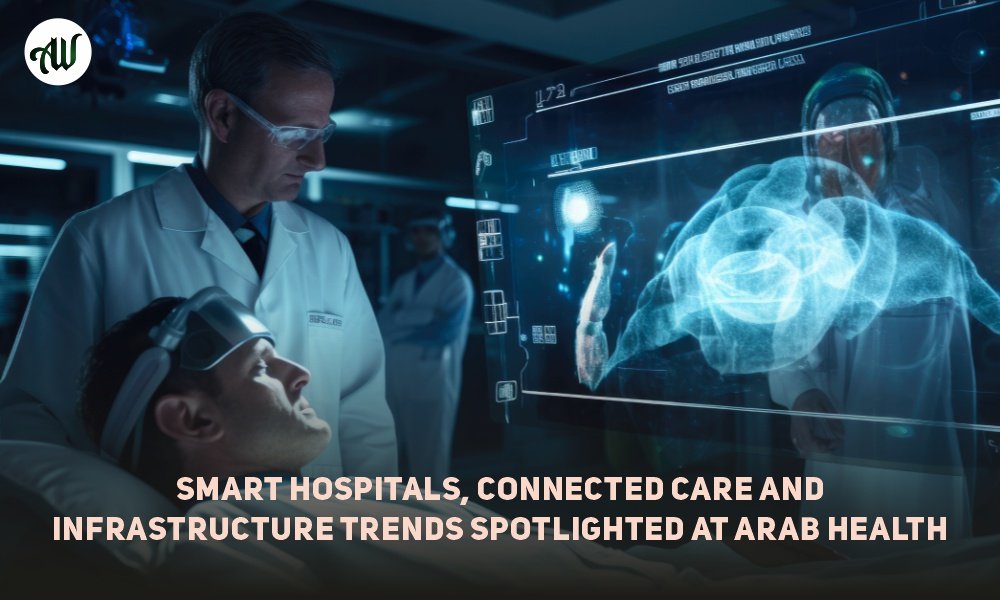
The Vision 2030 initiative has been gaining momentum in the Arab health transformation. Stakeholders, investors, and advisors say that its success relies on how skilfully the amalgamation of investment, innovation, and patient-centered care is implemented. The initiative includes several aspects, like financing for smart hospitals, the adoption of EHRs, and IoT devices.
The Rise of Smart Hospitals
Smart hospitals are reshaping healthcare delivery by combining AI, IoT, and automation to improve outcomes and streamline operations. From predictive analytics in patient monitoring to AI-powered diagnostics and robotic surgeries, healthcare institutions are adopting tools that make medicine faster, safer, and more efficient.
At Arab Wellness, exhibitors and industry leaders unveiled cutting-edge technologies designed to create hyper-connected hospital environments. These systems integrate data from multiple sources medical devices, wearables, and electronic health records to give clinicians a real-time view of patient health. The result? Smarter decisions, reduced human error, and personalized treatment plans driven by actionable insights.
In Saudi Arabia and the UAE, public and private hospitals are already investing in this model. Facilities like King Faisal Specialist Hospital and Dubai Health Authority centers are embedding automation in labs, AI in radiology, and robotics in surgery. These efforts align with the region’s broader goal of building world-class, data-driven healthcare systems under national transformation programs.
Connected Care: Extending the Hospital Beyond Its Walls
The pandemic proved that healthcare isn’t confined to hospitals anymore. Connected care models are expanding access by integrating telemedicine, remote monitoring, and mobile health platforms. This approach enables patients to receive expert care wherever they are at home, at work, or in rural areas.
Arab Health featured major discussions on virtual hospitals, home-based diagnostics, and smart wearables that transmit patient vitals in real time. These solutions are helping healthcare providers manage chronic diseases, reduce hospital admissions, and deliver continuous care across borders.
For example, GCC countries are deploying AI-enabled telehealth platforms that can handle high patient volumes while maintaining clinical quality. By connecting primary care physicians, specialists, and patients on a single digital platform, the healthcare system becomes more efficient, collaborative, and inclusive.
Infrastructure Innovation: Building the Hospitals of Tomorrow
Beyond technology, the physical infrastructure of healthcare is undergoing a revolution. Future hospitals are being designed for flexibility, sustainability, and integration with digital systems. Architects and engineers are reimagining spaces that adapt to evolving patient needs while minimizing environmental impact.
At Arab Health, exhibitors highlighted modular construction techniques, smart energy systems, and hospital design frameworks that support digital integration. For instance, “green hospitals” powered by renewable energy and equipped with smart climate control systems are gaining traction across the region. These facilities reduce operational costs while advancing national sustainability goals.
Digital twins, virtual replicas of hospital infrastructure, are also making waves. By simulating operations and resource allocation, administrators can optimize everything from patient flow to equipment maintenance. The GCC’s focus on smart city development further reinforces this trend, where healthcare infrastructure is seen as a core element of urban innovation.
The Human Element: Empowering Healthcare Professionals
While technology drives progress, human expertise remains at the core of healthcare. Smart hospitals and connected systems only succeed when medical staff are equipped with the right digital skills. The Middle East is therefore investing heavily in training and workforce development to ensure doctors, nurses, and technicians can leverage new technologies effectively.
Through its education forums and innovation tracks, Arab Health continues to serve as a platform for collaboration, knowledge sharing, and professional upskilling. With digital transformation accelerating across the region, these efforts are essential to maintaining high standards of care and patient safety.
Public-Private Collaboration and Investment Momentum
The momentum behind healthcare innovation in the Middle East is backed by strong government initiatives and private-sector participation. Programs under Saudi Vision 2030 and the UAE’s Centennial Plan 2071 emphasize digital health, data integration, and smart infrastructure as national priorities.
Investors are taking notice. Venture capital funds, health-tech startups, and multinational corporations are forging partnerships across the region. The insights and networking opportunities provided by Gulf Health are helping align these stakeholders toward a unified vision: building resilient, data-driven, and patient-first healthcare systems.
Conclusion
As healthcare enters a new digital era, Arab Health remains the focal point for innovation, investment, and collaboration across the Middle East. Smart hospitals, connected care models, and sustainable infrastructure are no longer futuristic concepts; they’re becoming the new industry standard.
The Middle East is proving that technology and compassion can coexist in healthcare. By integrating intelligence into every layer from hospital design to patient engagement, the region is setting an example for how to build a healthcare system that is not only efficient but deeply human.